Study finds thousand-year-old root may offer safer alternative to standard hair loss drugs
06/08/2026 / By Cassie B.
- Polygonum multiflorum acts on multiple hair growth pathways simultaneously, unlike standard drugs
- The herb inhibits DHT production while protecting hair follicle cells from premature death
- Animal studies show it can reawaken dormant follicles and extend the growth phase
- Proper processing is essential to avoid rare but serious liver side effects
- High-quality human trials are still needed before it can be clinically validated
A root used in Traditional Chinese Medicine (TCM) for over a millennium is now drawing scrutiny from hair loss researchers, following a review published in the Journal of Holistic Integrative Pharmacy that argues its effects may be broader than anything currently on the market.
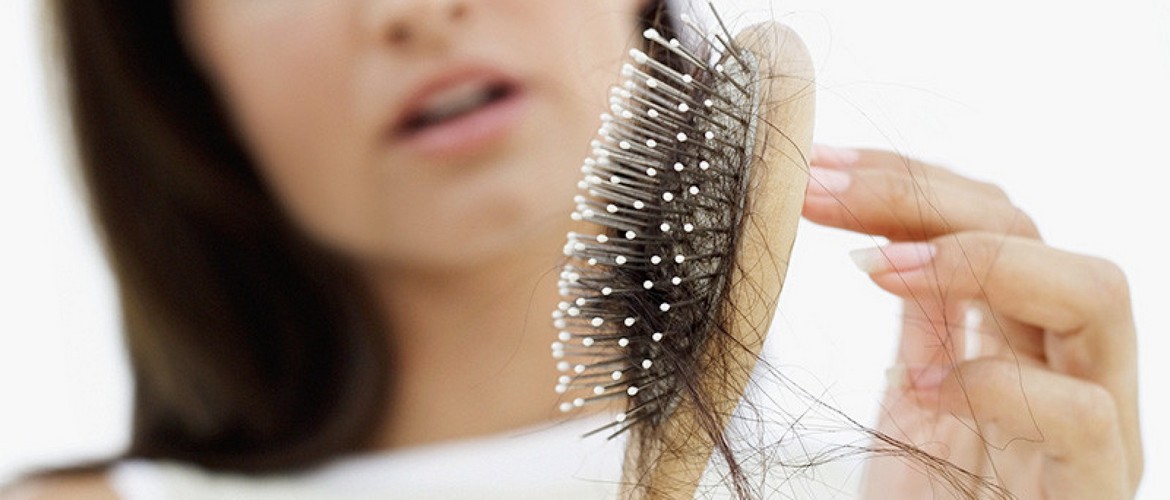
Androgenetic alopecia (male or female pattern hair loss) is the most common form of hair loss seen clinically, affecting millions of people worldwide. Though often associated with aging, it can appear earlier in life and in both sexes. Characteristic signs include a receding hairline, thinning at the crown, and scalp symptoms such as oiliness and itching. Left untreated, progressive thinning can lead to noticeable baldness.
Existing options remain limited. Finasteride and minoxidil are the primary medications used to manage the condition: finasteride by blocking the conversion of testosterone into dihydrotestosterone (DHT), the hormone most strongly tied to follicle shrinkage; minoxidil by stimulating follicle cells via its active form after absorption into the scalp. Both are effective for many patients, but both carry drawbacks. For example, finasteride has been associated with sexual side effects, while minoxidil can cause scalp irritation. Concerns about long-term use have left many patients looking for alternatives.
An ancient remedy, revisited
The review centers on Polygonum multiflorum, known in Chinese medicine as He Shou Wu. Ancient texts have described it for more than a thousand years as a remedy to darken hair and fortify its roots. The review’s authors argue that those traditional descriptions now have a plausible biological explanation.
“Our analysis bridges ancient wisdom and modern science,” said Bixian Han, the review’s lead author. “What surprised us was how consistently historical texts from the Tang Dynasty onward described effects that align perfectly with today’s understanding of hair biology. Modern studies now confirm that this isn’t folklore; it’s pharmacology.”
What sets the herb apart in the review’s framing is not any single mechanism but the apparent breadth of its action. Most approved hair loss drugs are designed around one biological target. P. multiflorum, by contrast, appears to work across several pathways simultaneously.
Multiple mechanisms
On the hormonal side, compounds in the herb such as emodin and physcion have been shown in laboratory studies to inhibit 5?-reductase, the enzyme that produces DHT, and to reduce androgen activity in skin tissue.
The herb also appears to protect follicle cells from premature death. In androgenetic alopecia, abnormal apoptosis shortens the hair growth phase and produces progressively thinner strands. A compound called TSG (2,3,5,4?-tetrahydroxyl diphenylethylene-2-O-glucoside) has been found to activate cell survival pathways — including PI3K/Akt and the protective protein Bcl-2 — while suppressing the pro-apoptotic signals Bax, Fas, and Caspase-3. The net effect is an extended anagen, or active growth, phase.
Beyond cellular survival, the review points to evidence that the herb activates two regeneration pathways, Wnt/?-catenin and Sonic hedgehog (Shh), that are essential for waking dormant follicles and sustaining stem cell activity. In animal models, topical application of P. multiflorum extracts triggered dormant follicles to re-enter the growth phase.
The herb also appears to adjust the broader follicle environment at the level of growth factors — raising levels of IGF-1, HGF, VEGF, FGF-7, and PDGF-AA while suppressing inhibitory signals like TGF-? and Dkk-1 — and to improve scalp microcirculation by reducing blood viscosity and encouraging the formation of small vessels around follicles, which improves the delivery of oxygen and nutrients.
Safety considerations
The review stresses that preparation is not incidental; it is central to the herb’s safety profile. In TCM, P. multiflorum is processed before use, a step that affects both its biological activity and its tolerability. The authors report that properly processed versions of the root carry a significantly better safety record than raw preparations. Improper processing or excessive doses have been associated with liver injury in rare cases, underscoring the need for standardized manufacturing and careful dosing if the herb is ever to be developed into a mainstream therapy.
Dermatologists and the review’s authors alike have cautioned against self-treatment. The optimal effective dose has not been established, and the quality of commercially available tonics, teas, and topical products varies considerably. Topical application appears to carry less risk than oral use.
A promising future
The review draws on laboratory research, animal studies, clinical observations, and historical herbal records, but the authors are candid that high-quality human trials are still lacking. Large, well-designed clinical studies would be required before P. multiflorum could be considered a validated treatment alongside finasteride and minoxidil.
What the review does establish, the authors argue, is a compelling scientific rationale for pursuing that research. An herb used for centuries to treat hair loss and graying turns out to act on many of the same biological processes that modern medicine has independently identified as central to the condition. That convergence, they suggest, is not coincidence, and it may point toward a richer class of hair loss therapies than what is currently available.
Sources for this article include:
Submit a correction >>
Tagged Under:
alternative medicine, Androgenetic alopecia, Chinese medicine, hair health, hair loss, health science, herbal medicine, Herbs, natural cures, natural health, natural medicine, Naturopathy, phytonutrients, plant medicine, Polygonum multiflorum, remedies, research
This article may contain statements that reflect the opinion of the author
RECENT NEWS & ARTICLES